
Introduction: A New Paradigm in Lithium Battery Lifecycle Management
As the global lithium battery industry accelerates toward electrification and large-scale energy storage, a critical question emerges:
What happens to millions of retired lithium-ion batteries?
Traditionally, battery recycling has focused on extracting valuable metals such as nickel, cobalt, and lithium through energy-intensive processes. However, recent breakthroughs led by Beijing Institute of Technology suggest a transformative alternative:
Directly upgrading retired cathode materials into higher-performance versions—without breaking them down into raw elements.
This emerging approach, known as battery regeneration or cathode upcycling, could redefine the economics and sustainability of the entire battery value chain.
What Is Battery Regeneration Technology?
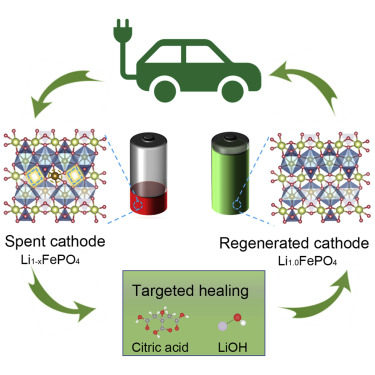
Battery regeneration refers to the process of restoring and enhancing the electrochemical performance of used lithium-ion battery materials at the structural level, rather than fully recycling them into raw metals.
Unlike conventional recycling methods, this approach:
- Preserves the original crystal structure of cathode materials
- Reintroduces lithium (re-lithiation)
- Adjusts elemental composition (e.g., increasing nickel content)
- Repairs lattice degradation caused by cycling
Key Example: NCM523 to NCM811 Upgrade
One of the most notable breakthroughs is the ability to convert:
- NCM523 (Ni:Co:Mn = 5:2:3) → mid-nickel cathode
- into
- NCM811 (Ni:Co:Mn = 8:1:1) → high-nickel cathode
This transformation results in:
- Higher energy density
- Lower cobalt dependency
- Increased commercial value
In essence, retired batteries are not just recycled—they are upgraded into next-generation materials.
Visualizing the Technology Shift


Traditional Recycling vs Regeneration: A Structural Comparison
Conventional Recycling (Pyrometallurgy / Hydrometallurgy)
- High energy consumption
- Complex chemical processing
- Destruction of original material structure
- Downcycling of materials
Regeneration (Direct Upcycling)
- Lower energy requirements
- Minimal structural damage
- Higher material retention value
- Potential performance enhancement
| Aspect | Traditional Recycling | Regeneration Technology |
|---|---|---|
| Process Type | Metal extraction | Structural repair & upgrade |
| Energy Consumption | High | Lower |
| Value Retention | Medium | High |
| Output | Raw materials | Advanced cathode materials |
Why This Breakthrough Matters
1. Cost Reduction Across the Battery Supply Chain
Cathode materials account for 30–50% of battery cost. Regeneration enables:
- Reduced dependence on mined materials
- Lower processing costs
- Improved supply chain resilience
This is particularly significant in the context of volatile nickel and cobalt markets.
2. Sustainability and ESG Compliance
Global battery production faces increasing pressure to meet environmental standards. Regeneration supports:
- Reduced carbon footprint
- Lower mining intensity
- Circular material utilization
This aligns with international sustainability frameworks and circular economy policies.
3. Strategic Resource Security
Countries and manufacturers are seeking alternatives to:
- Geopolitical risks in raw material supply
- Rising demand for EV and ESS batteries
Battery regeneration enables domestic material reuse, reducing reliance on imports.
Implications for the Global Battery Industry
For Battery Manufacturers
Companies such as CATL and BYD may benefit from:
- Lower material procurement costs
- Closed-loop production systems
- Integration of recycling and manufacturing
For Recycling Companies
The business model is evolving from:
“Metal recovery” → “Material regeneration and re-manufacturing”
Future leaders in this space will likely be those who master direct cathode regeneration technologies.
For Equipment and Materials Platforms (e.g., BatteryRing)
Battery regeneration opens new opportunities for:
- Cathode regeneration equipment suppliers
- Chemical treatment and re-lithiation materials
- Pilot line and laboratory-scale regeneration systems
This creates entirely new product categories within the battery manufacturing ecosystem.
Challenges to Commercialization
Despite its promise, several hurdles remain:
1. Process Scalability
Maintaining uniformity across large batches is technically complex.
2. Material Consistency
Used batteries vary widely in degradation levels and chemistry.
3. Certification & Safety
Regenerated materials must meet strict performance and safety standards.
4. Economic Viability
Cost advantages depend on process maturity and scale.
Future Outlook: From Recycling to Regeneration
The lithium battery industry is entering a new phase:
Recycling 1.0 → Regeneration 2.0 → Closed-loop Manufacturing 3.0
In the near future, we can expect:
- Industrial-scale cathode regeneration facilities
- Integration of regeneration into gigafactories
- Standardization of second-life battery materials
FAQ: Battery Regeneration Technology
Q1: Can all lithium-ion batteries be regenerated?
Not all, but many NCM-based cathodes are suitable for regeneration depending on degradation level.
Q2: Is regenerated material as good as new?
In some cases, regenerated materials can match or even exceed original performance.
Q3: How does this affect battery prices?
If scaled successfully, regeneration could significantly reduce battery costs.
Q4: Is this technology commercially available?
Currently in early-stage industrialization, with strong research backing and pilot projects underway.
Conclusion: A Structural Shift in Battery Value Creation
Battery regeneration is not just a technological improvement—it represents a fundamental shift in how value is created within the lithium battery industry.
By transforming retired batteries into high-performance materials, this approach bridges the gap between sustainability and profitability.
For platforms like BatteryRing, this trend signals a critical opportunity to position at the forefront of:
- Advanced battery materials
- Next-generation recycling technologies
- Global battery supply chain innovation
Author Profile

- BatteryRing Sales Engineers bring over 20 years of experience in the global battery supply chain, positioning us as true industry experts. We provide end-to-end consulting services covering the entire battery lifecycle, including R&D, laboratory testing, product planning, material sourcing, manufacturing equipment, system design, and full production line construction. Our mission is to empower your energy business with efficient, scalable, and technically advanced solutions for accelerated growth.
Latest entries

 Battery Price NewsMay 30, 2026Sodium-Ion Battery Material Cost Advantages: A Comprehensive Analysis of Raw Materials, Commercialization Progress, and Future Market Trends
- Industry NewsApril 22, 2026CATL Unveils Qilin Condensed Battery: Up to 1,500 km EV Range Breakthrough
- Major Company NewsApril 21, 2026CATL Power Battery Tech 2026: From Sodium-Ion Mass Production to Solid-State Roadmaps