
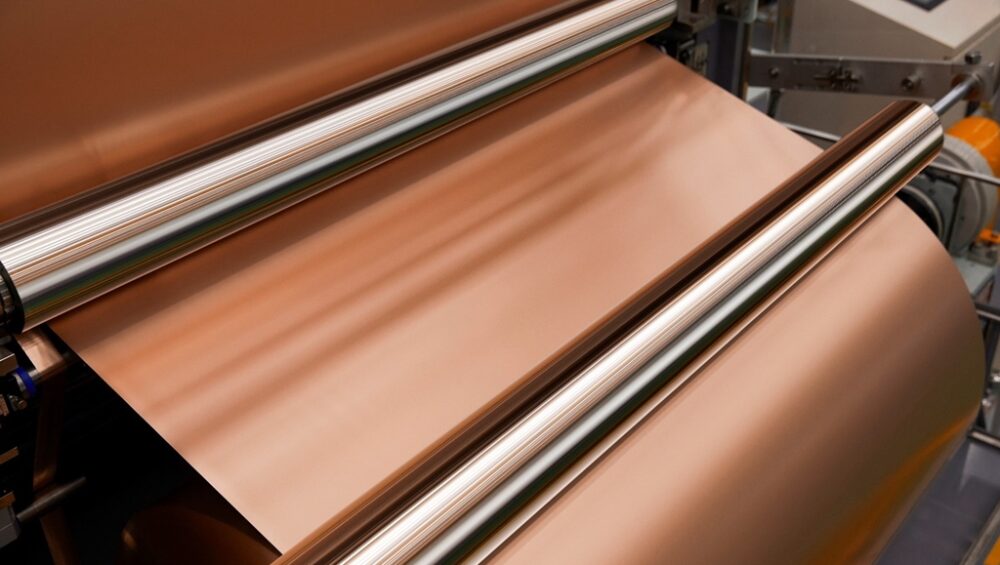
The global battery supply chain is on the brink of a material revolution. Researchers from the Chinese Academy of Sciences (CAS) have recently announced the successful development of a new type of high-strength, high-conductivity, and heat-resistant copper foil. For the lithium-ion battery sector, this is not merely an incremental update—it is a fundamental shift in how we approach energy density and thermal safety.
The Engineering Paradox: Strength vs. Conductivity
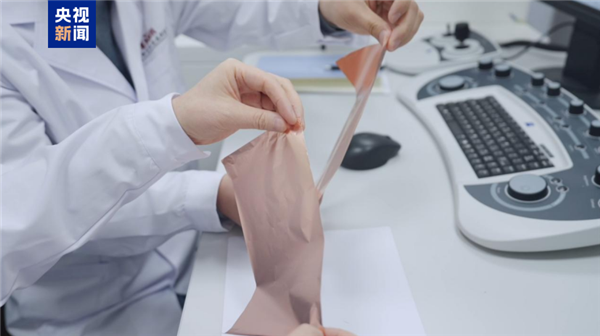
In traditional metallurgy, increasing the strength of copper often results in a significant drop in electrical conductivity. This “trade-off” has long been a bottleneck for battery manufacturers. However, by utilizing a nano-dispersed strengthening technique, the research team has successfully introduced stable nanostructures into the copper matrix.
This results in a material that maintains near-pure copper conductivity while achieving tensile strength levels previously unseen in standard electrodeposited (ED) or rolled-annealed (RA) foils.
Key Technical Advantages for Battery Applications
The adoption of this novel copper foil offers three critical improvements for next-generation power cells:
- Ultra-Thinning without Fragility: As the industry pushes toward 4μm and 4.5μm foils to reduce weight, mechanical failure becomes a risk. This high-strength variant allows for thinner current collectors that can withstand the high-tension winding processes of high-speed production lines.
- Enhanced Thermal Stability: Standard copper foils often soften (undergo annealing) at high temperatures. This new alloy retains its structural integrity during intensive welding and high-drain discharge cycles, significantly mitigating the risk of internal short circuits.
- Improved Cycle Life: The high fatigue resistance of the material helps the anode structure accommodate the volume expansion and contraction of silicon-based or graphite anodes during charging, prolonging the overall lifespan of the battery.
Market Impact and Supply Chain Integration
For platforms like BatteryRing, this development signals a shift in sourcing priorities. As solid-state batteries and high-nickel cathodes continue to evolve, the demand for “intelligent” current collectors is rising.
The mass production of this material could potentially lower the reliance on expensive additives while providing a more robust framework for Low Altitude Economy (eVTOL) and Long-Range Electric Vehicles, where weight-to-power ratios are critical.
Industry Outlook
This breakthrough underscores the importance of fundamental material science in solving the “bottleneck” issues of the energy transition. As this technology moves from the laboratory to industrial-scale production, it will likely become a benchmark for premium battery specifications worldwide.
Author Profile

- BatteryRing Sales Engineers bring over 20 years of experience in the global battery supply chain, positioning us as true industry experts. We provide end-to-end consulting services covering the entire battery lifecycle, including R&D, laboratory testing, product planning, material sourcing, manufacturing equipment, system design, and full production line construction. Our mission is to empower your energy business with efficient, scalable, and technically advanced solutions for accelerated growth.
Latest entries

- Battery Price NewsMay 30, 2026Sodium-Ion Battery Material Cost Advantages: A Comprehensive Analysis of Raw Materials, Commercialization Progress, and Future Market Trends
- Industry NewsApril 22, 2026CATL Unveils Qilin Condensed Battery: Up to 1,500 km EV Range Breakthrough
- Major Company NewsApril 21, 2026CATL Power Battery Tech 2026: From Sodium-Ion Mass Production to Solid-State Roadmaps