
Why Copper Foil Innovation Matters in the Battery Industry
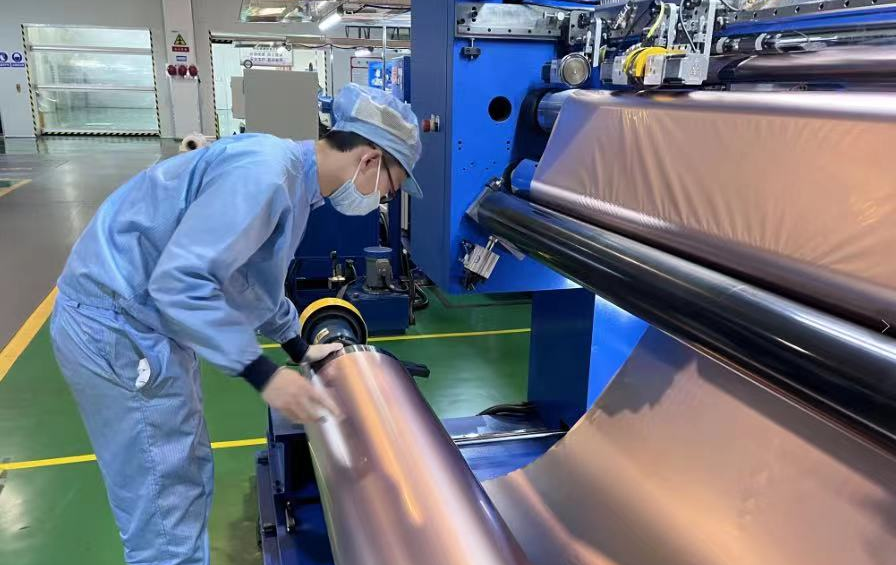
Copper foil is a critical material in modern energy systems, especially as the current collector for lithium-ion batteries. As demand for high-performance batteries, fast charging, and high-power industrial applications continues to grow, conventional copper foil technologies are reaching their limits.
A recent breakthrough by Chinese scientists has introduced a new type of high-strength, high-conductivity copper foil with enhanced thermal stability, potentially redefining the future of battery copper foil materials and advanced electronic systems.

This innovation addresses a long-standing challenge in materials science: balancing mechanical strength, electrical conductivity, and thermal resistance in a single material system.
What Is the New High-Strength Copper Foil?
The newly developed material is a next-generation copper foil engineered with:
- Ultra-high mechanical strength
- High electrical conductivity close to pure copper
- Exceptional thermal stability under long-term operation
Unlike traditional copper foil, which suffers from performance trade-offs, this new material achieves a simultaneous optimization of multiple critical properties.
Key Performance Metrics
- Tensile Strength: ~900 MPa (approximately 2× conventional copper foil)
- Electrical Conductivity: ~90% of pure copper
- Thermal Stability: Stable performance after prolonged exposure at ambient conditions
These parameters indicate a significant step forward in advanced copper foil materials for batteries and electronics.
Technical Innovation: Gradient Nanostructure Engineering
The core of this breakthrough lies in a novel microstructural design strategy known as:
Gradient Nanostructured Copper
Researchers introduced:
- Nano-scale domains (~3 nm)
- Gradient distribution across the foil thickness
- Controlled electrochemical deposition with organic additives
This structure enables:
- Enhanced strength through nanoscale reinforcement
- Efficient electron transport via continuous conductive pathways
- Improved thermal stability by reducing structural degradation
This approach represents a shift from traditional alloying methods to precision microstructure engineering, opening new pathways in functional metal materials design.
Applications of High-Conductivity Copper Foil in Batteries
1. Lithium-Ion Battery Current Collectors
Copper foil serves as the anode current collector in lithium-ion batteries. The new material offers:
- Lower internal resistance
- Higher current carrying capacity
- Improved cycle stability
This directly contributes to:
- Faster charging speeds
- Higher energy density
- Longer battery lifespan
2. High-Power Industrial Applications
For sectors such as:
- Electric forklifts
- AGV (Automated Guided Vehicles)
- Energy storage systems (ESS)
High-strength copper foil enables:
- Reduced thermal buildup
- Improved safety under high load
- Enhanced power output stability
3. Advanced Electronics and AI Hardware
The material is also highly relevant for:
- High-density PCBs
- Semiconductor interconnects
- AI server infrastructure
Its improved conductivity and thermal performance help address:
- Signal loss
- Heat dissipation challenges
- Long-term reliability
Industrialization Potential: From Lab to Supply Chain
One of the most important aspects of this development is its compatibility with existing electro-deposition processes.
Unlike many laboratory innovations, this technology:
- Can be integrated into current copper foil manufacturing lines
- Requires only process optimization (e.g., additives and deposition control)
- Has strong potential for scalable mass production
This makes it highly attractive for:
- Copper foil manufacturers
- Battery material suppliers
- Global battery supply chain platforms
Impact on the Global Battery Materials Market
The introduction of high-strength, high-conductivity copper foil could reshape several key segments:
- High-end battery materials
- Electric vehicle (EV) supply chains
- Energy storage infrastructure
- AI and high-performance computing hardware
As battery systems move toward:
- Higher energy density
- Faster charging
- Greater safety requirements
Advanced copper foil materials will become a core enabling technology.
Frequently Asked Questions (FAQ)
What is high-strength copper foil used for?
High-strength copper foil is primarily used as a current collector in lithium-ion batteries, as well as in advanced electronics and high-power industrial systems.
Why is conductivity important in copper foil?
High conductivity reduces electrical resistance, enabling:
- Faster charging
- Lower energy loss
- Improved overall battery efficiency
Can this new copper foil be mass-produced?
Yes. The technology is based on existing electro-deposition processes, making it suitable for large-scale industrial adoption with process optimization.
How does this innovation impact battery performance?
It improves:
- Power output
- Thermal stability
- Cycle life
making it highly valuable for next-generation battery systems.
Conclusion: A Foundational Material for the Next Energy Era
The development of next-generation high-strength copper foil represents a significant advancement in battery materials science and industrial manufacturing.
By overcoming the traditional trade-offs between strength, conductivity, and thermal stability, this innovation lays the groundwork for:
- More efficient batteries
- Safer energy systems
- Higher-performance electronics
As the global energy transition accelerates, advanced materials like this will play a critical role in shaping the future of battery technology and the global supply chain.
Author Profile

- BatteryRing Sales Engineers bring over 20 years of experience in the global battery supply chain, positioning us as true industry experts. We provide end-to-end consulting services covering the entire battery lifecycle, including R&D, laboratory testing, product planning, material sourcing, manufacturing equipment, system design, and full production line construction. Our mission is to empower your energy business with efficient, scalable, and technically advanced solutions for accelerated growth.
Latest entries

- Battery Price NewsMay 30, 2026Sodium-Ion Battery Material Cost Advantages: A Comprehensive Analysis of Raw Materials, Commercialization Progress, and Future Market Trends
- Industry NewsApril 22, 2026CATL Unveils Qilin Condensed Battery: Up to 1,500 km EV Range Breakthrough
- Major Company NewsApril 21, 2026CATL Power Battery Tech 2026: From Sodium-Ion Mass Production to Solid-State Roadmaps